
Skin
Choosing the Best Sunscreen for Melasma: A Barrie Nurse's Guide
Manochehr Samya Kalantari, RN · November 12, 2026 · 6 min read
If you live with melasma, you probably already know the frustrating part: you can do everything right for weeks, then one sunny afternoon at the beach on Kempenfelt Bay or a bright day on the ski hill, and those brown patches seem to come right back. As a Registered Nurse who sees melasma often here in Barrie, I tell almost every client the same thing first: before we talk about any treatment, we need to talk about sunscreen.
That might not sound exciting, but for melasma it is the foundation everything else stands on. In this guide I'll explain what to look for in a sunscreen for melasma, why the usual "SPF 30 and done" advice is not quite enough, and how to make it work through a Simcoe County winter.
What makes melasma different from other dark spots
Melasma shows up as brown or grey-brown patches, most often on the cheeks, forehead, upper lip and chin. It is linked to hormones (it is common in pregnancy and with some birth control), genetics and light exposure. It is not the same as a sun spot or age spot, and that difference matters.
A sun spot is a fixed patch of pigment that can often be lifted with IPL or our Q-switched laser. Melasma behaves more like a thermostat that is set too high: the pigment cells are easily triggered, and heat, strong light and irritation can all turn them up again. That is why melasma tends to come back, and why protecting your skin every single day is the most important step.
The three things I look for in a sunscreen for melasma
1. Broad-spectrum, SPF 30 or higher
"Broad-spectrum" means the sunscreen protects against both UVB (the burning rays) and UVA (the deeper rays that come through windows and clouds and play a big role in pigment). The American Academy of Dermatology recommends a broad-spectrum, water-resistant sunscreen with SPF 30 or higher for people with melasma. On the label in Canada, look for the words "broad spectrum" along with the SPF number.
2. Tinted, with iron oxides
This is the part many people miss. Research suggests that visible light (the ordinary light we see, not just UV) can also darken melasma, especially in medium and darker skin tones. Most clear sunscreens do very little against visible light.
Tinted sunscreens that contain iron oxides add a physical layer that helps block some visible light. The AAD specifically recommends a tinted sunscreen with iron oxide and SPF 30+ for melasma. Check the ingredient list for "iron oxides" (often written as CI 77491, CI 77492 or CI 77499). A tint also has a bonus: it can even out your tone a little, so some people like to use it in place of foundation.
3. Gentle on your skin
Irritation can make pigment worse. If a sunscreen stings, burns or makes you red, stop using it. Fragrance-free formulas are usually a safer choice. Mineral sunscreens (zinc oxide and titanium dioxide) tend to be well tolerated by sensitive skin, but the best sunscreen is the one you will actually wear every day, so texture and finish matter too.
How to apply it so it actually works
Even a great sunscreen only works if there is enough of it on your skin. A few habits I recommend:
- Use enough. Most people apply far less than they think. For the face and neck, aim for a generous layer rather than a thin smear, and don't forget your hairline, upper lip and ears.
- Apply 15 minutes before going outside, as the AAD suggests, so it has time to settle.
- Reapply at least every two hours when you are outdoors, and after sweating or swimming. A tinted mineral powder or a sunscreen stick can make reapplying over makeup easier.
- Add shade and a hat. A wide-brimmed hat and sunglasses take a lot of pressure off your sunscreen.
- Think about heat, too. Heat may also trigger melasma for some people, for example hot yoga, saunas or a hot kitchen. Sunscreen can't block heat, so keeping your skin cool helps.
Where to get a sunscreen I can help you choose
You can find good options at the pharmacy; just check the label for the features above. If you'd like help choosing, our clinic carries medical-grade AlumierMD skincare, including sunscreens and products for uneven pigment. You can shop AlumierMD online with our clinic link and it ships to your door, or see our skincare shop page. Full disclosure: we are an AlumierMD clinic, and purchases through our link support the clinic. If you're not sure which product suits your skin, text or call us at 705-481-1091 before you buy and I'll point you in the right direction.
Yes, you need it in a Barrie winter
I hear "I don't need sunscreen in November" a lot. For melasma, I gently disagree. Environment and Climate Change Canada notes that fresh white snow can reflect over 80% of the sun's UV rays, and that on bright snowy days UV exposure can nearly double. If you ski at Horseshoe or Snow Valley, skate outdoors or walk the waterfront on a bright January morning, your face is getting more light than you might expect.
UVA also passes through car and office windows, and visible light is with us all year. So my advice for clients from Barrie, Innisfil, Orillia and Midhurst is simple: tinted, broad-spectrum SPF 30+ every morning, 12 months a year, as part of brushing your teeth.
Winter is also the season when indoor heating dries out the skin. A dry, irritated barrier can make melasma harder to manage, so pair your sunscreen with a gentle moisturiser.
When sunscreen isn't enough on its own
Sunscreen protects what you already have and helps stop melasma from getting darker, but it usually won't clear existing patches by itself. Once your daily protection is consistent, there are options we can look at together:
- Topical care your family doctor or dermatologist may prescribe.
- Gentle in-clinic treatments, chosen carefully. Because strong light and heat can make melasma worse, we take a cautious, step-by-step approach. Some people may be suitable for a gentle Hollywood Peel or a carefully planned course of other treatments, and some are not. I will always tell you honestly if I think a treatment is likely to aggravate your melasma.
- Patience. Melasma is a long-term condition. The goal is control and a more even tone, not a one-time fix.
If you're curious how we plan treatments around sensitive, pigment-prone skin, my posts on natural-looking rejuvenation and why fall and winter suit laser treatments explain more.
One important safety note: any spot that is new, changing, bleeding or irregular should be checked by a doctor before any cosmetic treatment.
Frequently asked questions
What is the best sunscreen for melasma? Look for a broad-spectrum, tinted sunscreen with SPF 30 or higher that contains iron oxides, in a gentle, fragrance-free formula you are happy to wear every day. The brand matters less than these features and how consistently you use it.
Is mineral or chemical sunscreen better for melasma? Both can protect against UV. Tinted mineral sunscreens with iron oxides add some protection against visible light and tend to suit sensitive skin, which is why many people with melasma prefer them.
Do I need sunscreen indoors if I have melasma? If you sit near a window for much of the day, it's a good idea, because UVA passes through glass. Visible light from the sun also reaches you indoors near windows.
Can sunscreen alone make melasma go away? Usually not on its own, but daily protection may help patches fade gradually and helps prevent them from getting darker. It also protects the results of any treatment you choose.
Can melasma be treated with a laser in Barrie? Some people may be suitable for gentle, carefully planned light-based treatments, but strong light and heat can make melasma worse. That's why a proper assessment comes first at your consultation.
Let's make a plan for your skin
If melasma is affecting your confidence, you don't have to figure it out alone. Book a free consultation at Simcoe Cosmetic Clinic, 129 Dunlop St E in downtown Barrie, or call us at 705-481-1091. We'll look at your skin, talk through your daily routine and build an honest, realistic plan, with no pressure.
Individual results vary.
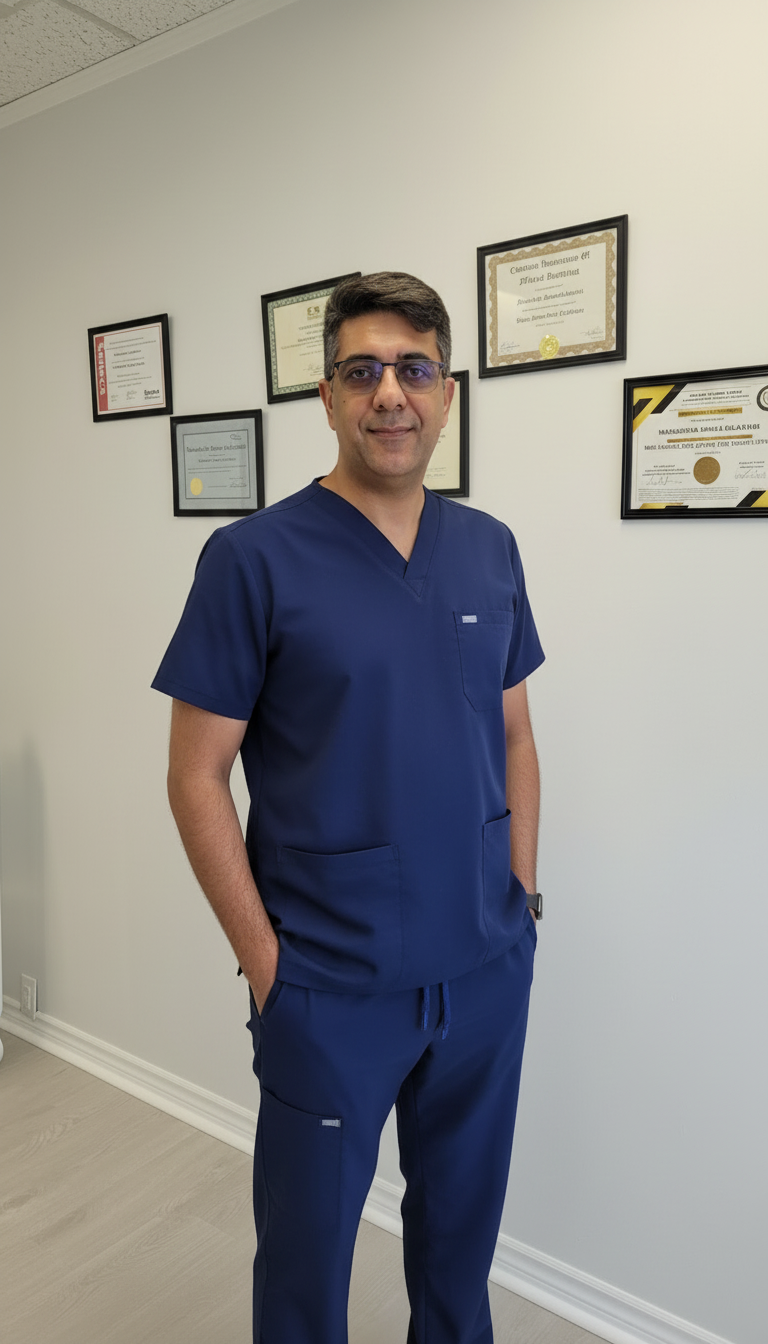
About the author
Manochehr Samya Kalantari, RN
Founder of Simcoe Cosmetic Clinic and a Registered Nurse with more than 30 years in health care, including ICU, ER and IV nursing.
Read moreHave questions about your treatment options?
Book a free consultation


Ready when you are.
Start with a consultation. Leave with a plan that's yours.