
Wellness
Bladder Leaks After Prostate Surgery: A Barrie Nurse's Guide for Men
Manochehr Samya Kalantari, RN · November 16, 2026 · 3 min read
Many men come out of prostate surgery relieved that the hard part is over, then find something nobody prepared them for: leaking when they cough, stand up, lift something or laugh. Most of them don't tell anyone, not even their partner.
If that's you, you're not alone, and it's not something you just have to live with. As a Registered Nurse in Barrie, I want to explain in plain words why it happens, what usually helps, and when to call your doctor.
Why leaking happens after prostate surgery
The prostate sits right below the bladder, wrapped around the tube that carries urine out. When it's removed or treated, the muscles and tissues that help hold urine in are disturbed. For a while, the job of staying dry falls mostly on your pelvic floor, the band of muscles at the base of your pelvis.
If those muscles are weak, or you've never had to use them on purpose, leaks happen with any sudden pressure on the bladder. That's why coughing, sneezing, lifting and standing up are the classic triggers.
The good news: it often improves
For many men, bladder control gets better over the weeks and months after surgery. How fast depends on the type of surgery, your age, your health before surgery and how strong your pelvic floor is. Your urologist is the best person to tell you what to expect in your own case.
What usually helps
1. Pelvic floor exercises (Kegels). This is the standard first step. You learn to find and squeeze the muscles you'd use to stop the flow of urine, then practise holding and relaxing them several times a day. Many men find them hard to do correctly at first, which is where a pelvic health physiotherapist can make a big difference.
2. Small daily habits.
- Spread your fluids through the day rather than drinking a lot at once.
- Cut back on caffeine, alcohol and fizzy drinks, which can irritate the bladder.
- Squeeze your pelvic floor before you cough, sneeze or lift. This is sometimes called "the knack".
- Keep your bowels regular. Straining on the toilet puts pressure on the pelvic floor.
3. Pelvic floor strengthening with a pelvic floor chair. Our chair uses HIFEM (high-intensity focused electromagnetic) technology to make the pelvic floor muscles contract strongly while you sit, fully clothed. It's like thousands of Kegels you don't have to do yourself. Research in men, including after prostate surgery, is promising but still limited, so we see it as a complement to exercises and physiotherapy, not a replacement. Individual results vary.
When to call your doctor first
Pelvic floor work isn't the answer for everything. See your doctor or urologist before starting any treatment if you have:
- Blood in your urine
- Burning, fever or signs of an infection
- A weak stream, straining, or a feeling that your bladder never empties
- Trouble passing urine at all
- New leaking that came on suddenly, or with back pain, numbness or leg weakness
And always get your urologist's OK before starting pelvic floor treatment after surgery.
How we can help in Barrie
At Simcoe Cosmetic Clinic, men's pelvic floor sessions take place in a private room, one-on-one with a nurse, and you stay fully clothed the whole time. We start with a short assessment to make sure it's safe and right for you, then measure your progress together, so you can see whether it's helping.
You can read more on our Pelvic Floor Therapy for Men page.
Visit us at 129 Dunlop St E, Barrie, call 705-481-1091, or book a free consultation online.
This article is general information, not medical advice. Individual results vary.
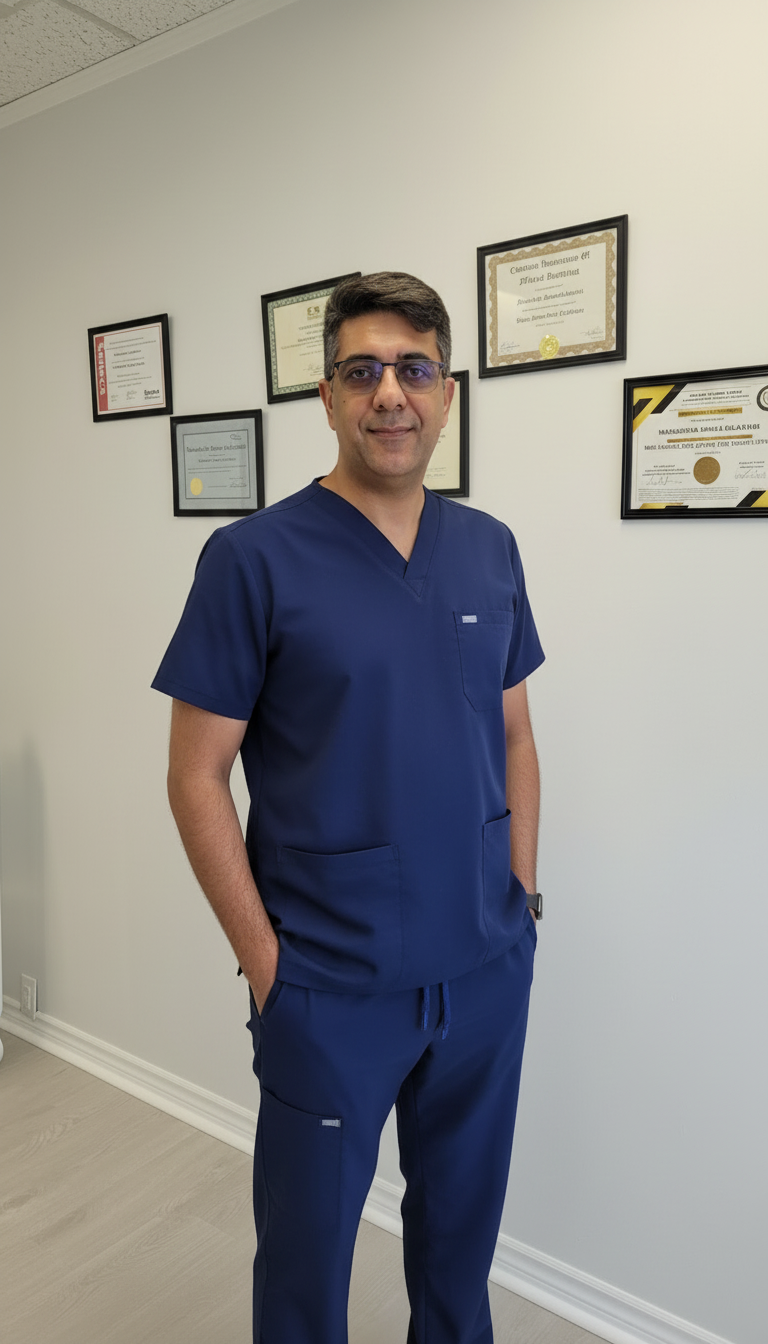
About the author
Manochehr Samya Kalantari, RN
Founder of Simcoe Cosmetic Clinic and a Registered Nurse with more than 30 years in health care, including ICU, ER and IV nursing.
Read moreHave questions about your treatment options?
Book a free consultation

Ready when you are.
Start with a consultation. Leave with a plan that's yours.